

Genetics Society of America

We are an international community of biologists advancing the field of genetics.
Become a MemberNews & Events

Conferences
GSA conferences foster collaboration, resource development, and the spread of technology and ideas.

Publications
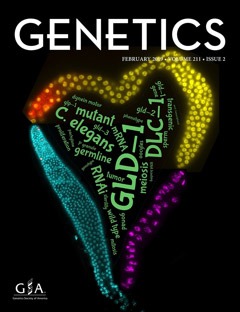
Our peer-reviewed journals GENETICS and G3: Genes|Genomes|Genetics publish high-quality, original genetics research across the breadth of the field.
Career Development
GSA professional development programs provide rich opportunities for scientists to gain skills and experience.
Come to a conference!
Find and post jobs.
Jobseekers:
Looking for a job, postdoc, studentship, or internship? Post a resume, apply for jobs, and sign up for job alerts!
Employers:
Reach a broad range of biologists at all career stages and from all sectors. Postdoc and student positions can be posted free of charge.
Latest job postings:
- Professor (all ranks) Microbiome and Human Health | Arizona State University
- Artificial Intelligence and Cybersecurity 12-month Faculty / Lab Director (GA002) | Brightpoint Community College
- Assistant/Associate/Full Professor - Cancer Biology | UCLA Health
- Cincinnati Children's - Human Genetics - Associate Professor/Professor, Clinical Laboratory Director | Cincinnati Children's
- Cincinnati Children's - Human Genetics - Assistant or Associate Professor | Cincinnati Children's
Read the latest.

Research funding roadmap: How policy debates are impacting today’s funding model
The previous post in this two-part series focused on the United State’s current research funding model and the history behind it—but today, we’re facing policy debates that may radically change this long-standing process. In the...

Research funding roadmap: The route to today’s model
Research funding today is complicated. Much of that complexity traces back to World War II, which reshaped who pays for science. Prior to the war, most research funding came from philanthropic donations and government labs....

Anatomy of an R01 Grant
If you work in a lab that receives funding from the U.S. federal government, chances are that you’ve heard the term “R01” (pronounced “R – OH – 1”). An R01 is one of the many...

Get the benefits of membership.
- Discounted conferences fees
- Reduced journal publication charges
- Individual GENETICS subscription
- Eligibility for travel grants and awards
- Access to professional development programs and resources
Join our community of nearly 6,000 researchers from all career stages and more than 50 countries.

It was critical that GSA was so willing to put their faith in us. Many people didn’t initially have a lot of confidence that a group of postdocs could organize a new event of this scale.
Learn more