Genetics Society of America

GSA Award Seminars
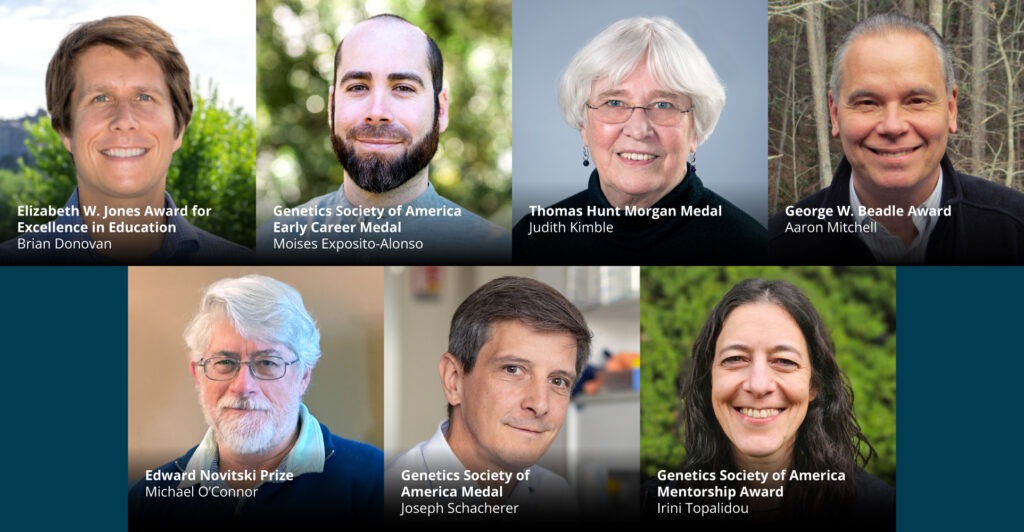
Learn more about the 2026 awardees ≫
Upcoming seminars:
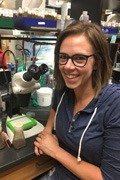
Genetics Society of America Mentorship Award recipient Irini Topalidou: WORMing through science: From discoveries to mentorship
August 20, 2026 from 1:00 p.m. –2:00 p.m. EDT
In this seminar, Irini Topalidou will describe how the tiny worm, C. elegans, has served as a compass guiding her across research stages, disciplines, career paths, and approaches to mentorship. Through this organism, she has explored fundamental questions in neurobiology, alongside more recent investigations into proteostasis and organismal biology. Far from being just a tool, C. elegans has acted as a bridge to new ideas, mentorship, collaborations, and scientific communities, helping to shape both her intellectual development and her perspectives on training and mentorship. Read her full profile in Genes to Genomes.
Genetics Society of America Medal recipient Joseph Schacherer: Dissecting the phenotypic landscape in the pangenomic era
September 15, 2026, from 1:00 p.m.–2:00 p.m. EDT
Individuals from the same species can differ by millions of genetic variants, yet much of how this genetic diversity shapes observable complex traits remains unknown.
In this seminar, Joseph Schacherer will discuss how large-scale long-read sequencing and deep phenotyping of more than 1,000 natural Saccharomyces cerevisiae isolates provide new insights into the genetic basis of complex traits and missing heritability. He will present how integrating SNPs, insertions/deletions, structural variants, and graph-based pangenome uncovers distinct genetic architectures underlying molecular and organismal phenotypes. Read his full profile in Genes to Genomes.