

Genetics Society of America


GSA e-News
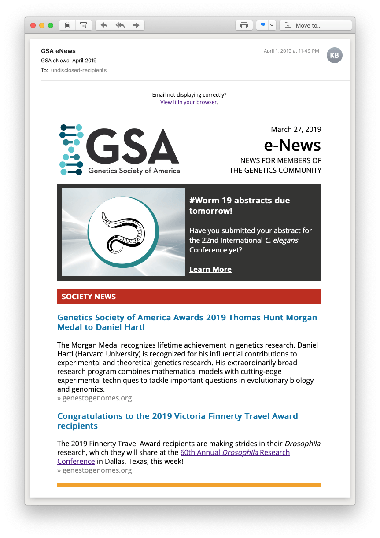 Browse old issues of the GSA e-News by clicking on the links below. For more recent news from the Society, check out the latest edition of the GSA e-News or the Genes to Genomes blog. Between 2004 and 2014, GSA published the GENEtics newsletter, later renamed the GSA Reporter. See the GSA Reporter and GENEtics archives.
2010 | 2011 | 2012 | 2013 | 2014 | 2015 | 2016 | 2017 | 2018 | 2019
2015 GSA e-News Archive
July 22, 2015
July 8, 2015
June 25, 2015
June 10, 2015
May 27, 2015
May 13, 2015
April 29, 2015
April 15, 2015
April 2, 2015
March 19, 2015
March 3, 2015
February 19, 2015
February 4, 2015
January 21, 2015
January 7, 2015
Read the latest GSA news on the blog.

Early Career Leadership Spotlight: Samuel Isife
We’re taking time to get to know the members of the GSA Early Career Scientist Subcommittees. Join us to learn more about members of the Early Career Leadership Program.

What happens when you send a letter to Congress?
Ever wonder what happens after you contact your elected officials? Former AAAS-ASGCT Congressional Policy Fellow in the U.S. House of Representatives, Adriana Bankston walks us through the journey of a congressional advocacy letter and explains...

Early Career Leadership Spotlight: Faye Romero
We’re taking time to get to know the members of the GSA Early Career Scientist Subcommittees. Join us to learn more about members of the Early Career Leadership Program.