

Genetics Society of America


GSA e-News
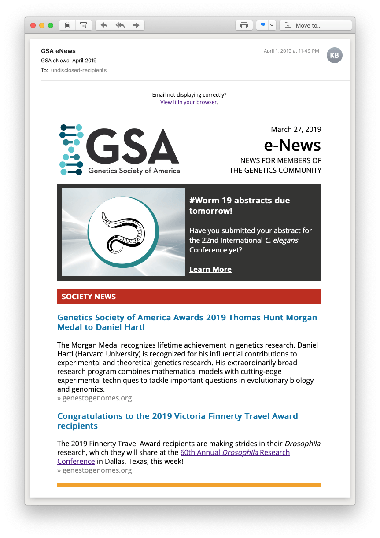 Browse old issues of the GSA e-News by clicking on the links below. For more recent news from the Society, check out the latest edition of the GSA e-News or the Genes to Genomes blog. Between 2004 and 2014, GSA published the GENEtics newsletter, later renamed the GSA Reporter. See the GSA Reporter and GENEtics archives.
2010 | 2011 | 2012 | 2013 | 2014 | 2015 | 2016 | 2017 | 2018 | 2019
2019 GSA e-News Archive
July 17, 2019
July 3, 2019
June 19, 2019
June 5, 2019
May 22, 2019
May 8, 2019
April 24, 2019
April 10, 2019
March 27, 2019
March 13, 2019
February 27, 2019
February 13, 2019
January 30, 2019
January 16, 2019
Read the latest GSA news on the blog.

Research funding roadmap: The route to today’s model
Research funding today is complicated. Much of that complexity traces back to World War II, which reshaped who pays for science. Prior to the war, most research funding came from philanthropic donations and government labs....

Anatomy of an R01 Grant
If you work in a lab that receives funding from the U.S. federal government, chances are that you’ve heard the term “R01” (pronounced “R – OH – 1”). An R01 is one of the many...

Genetic model turns routine mating into a visible injury model
A new model of copulatory wounding in Drosophila melanogaster offers a genetic tool to study sexual conflict.